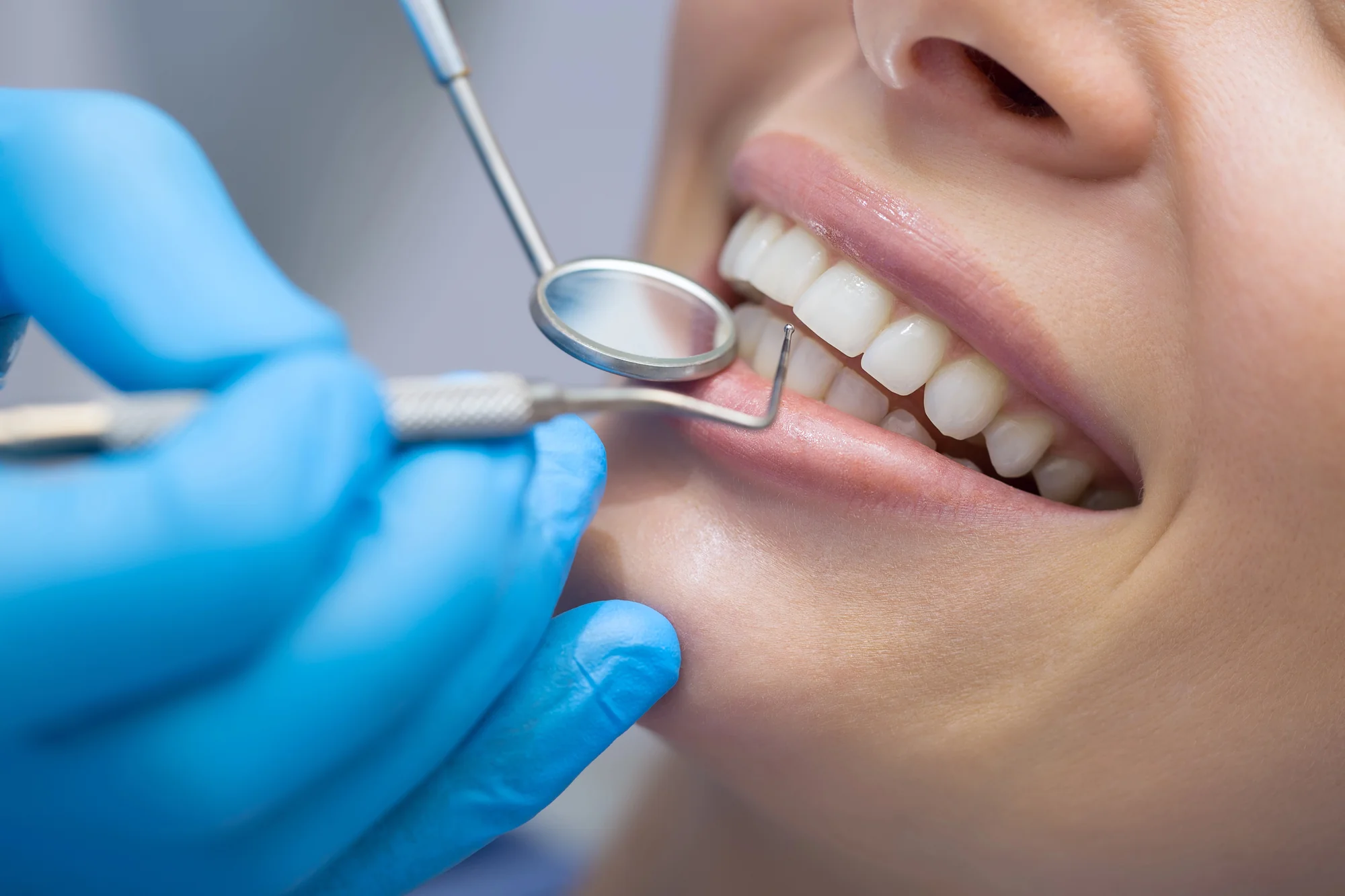
To ensure optimal oral health, your approach should extend beyond daily rituals of brushing and flossing. Even with your best hygiene, the complex shape of your posterior teeth could lead to decay. Your teeth’ topography comprises microscopic pits and fissures, especially on your molars.
The fissures are so small, and in most cases, they are narrower than a single toothbrush bristle, allowing bacteria to enter and produce destructive acids freely. Dental sealants are more effective in preventing the development of caries than in treating decay that has already developed.
At SoCal Dental of Valencia, we offer high-quality dental sealants as a preventive measure to strengthen these high-risk areas against bacterial attack. If you consider dental sealants as the ideal measure to protect your dental health, contact our dental office to have us assess your needs today.
An Overview of Dental Sealants
Considering the mechanics of dental decay, the process is multifactorial and depends considerably on the environment of the oral biofilm. Dental sealants are a high-tech preventive mechanism that aims to modify this environment by physically blocking the access of pathogens to the susceptible grooves of your teeth.
Sealants, which are painted on the chewing surfaces of your premolars and molars, are clinically defined as thin and protective coatings, usually made of medical-grade resin or glass ionomer.
After the material attaches itself to the enamel and cures, it forms an indestructible, smooth layer that serves as a shield against food particles and acid-producing bacteria. You must think of this treatment as a protective raincoat over your teeth so that the nooks and crannies of your teeth are kept dry and out of the metaphorical storm of bacterial fermentation.
Your molars have anatomical grooves that are necessary for grinding food, but they are deep, providing a conducive environment for plaque. Usual fluoride remedies are very effective in hardening the smooth surfaces of your enamel; however, they often lack the physical protection necessary to safeguard deep fissures in your teeth. This is where sealants play a vital role in your preventive care plan.
When you cover these pits, you effectively conceal approximately 80% of cavities, for example, in school-age children. Dental sealants are not an addition to your cleaning routine, but they actually cover the surface structure of your teeth, making them more disease-resistant on their own. This is a fundamental part of current-day preventive dentistry, offering a high level of protection throughout the years, especially in children, who are most prone to tooth decay.
Who Should Get Dental Sealants?
The optimal timing for dental sealants depends on the eruption schedule of the teeth and the patient’s individual risk factors. Dentists recommend early intervention to maximize the preventive effect of the treatment. The time of maximum opportunity occurs immediately after the permanent molars erupt from the gingival tissue.
Children and Adolescents
In children, new teeth have not yet been subjected to years of consuming sugars and bacterial colonization. Applying a sealant immediately will ensure that the deep grooves are covered before the decay process even begins. You should keep a keen eye on your child’s teeth, as the initial group of permanent molars is expected to emerge at around six years of age, and the second group at around twelve years of age.
Adults with Deep Molar Fissures
Although the leading candidates are children and adolescents, as caries are prevalent during these developmental stages, the positive effects of the treatment on adults cannot be neglected. In case you have deep molar fissures and have been lucky to avoid fillings or severe decay in those teeth, then you are a perfect target of this protective procedure.
Young Adults and Healthy Adults
The Centers for Disease Control and Prevention (CDC) states that young adults aged 20 to 34 years tend to harbor untreated cavities in their back teeth, which suggests that sealants should provide long-term protection even in adulthood. As long as the tooth surface is healthy and no restorations are already in place, the use of a sealant can be considered a viable and highly effective way of maintaining your natural tooth structure throughout your life.
Pediatric Sealants
Baby teeth are essential placeholders for permanent teeth that will succeed them. In the event of premature loss of one of the primary molars due to decay, this can cause serious alignment problems and result in costly orthodontic treatment in the future. As such, your dentist can prescribe sealants for primary teeth in cases where they have deep pits and grooves.
The most crucial application, however, is when permanent six-year molars arrive. They are supposed to be used for a lifetime, but they tend to be the least well-maintained, as children often lack the manual dexterity needed to brush their teeth properly.
Using pediatric sealants, you are providing your child with a clinical safety net during a high-risk time. The American Dental Association’s (ADA) research shows that the number of cavities in the first molars of children who have not received sealant treatment is nearly three times that of children who have undergone the treatment.
The goal is to help your child go through their most cavity-prone years, which are usually between the ages of six and fourteen, with their enamel intact. This preventive care will establish a foundation for long-term health, making it less likely that the person will become anxious about dental treatment later on, when more invasive restorative therapies are required, such as fillings or crowns.
Sealants for Adults
While sealants are traditionally associated with childhood, the window for preventive care remains open for many adults. However, your risk for decay does not simply disappear with age. The candidacy of adults for sealants is widely based on the condition of the molars that you have. If your back teeth are characterized by deep, narrow fissures that are difficult to clean, then you are still at risk, regardless of your age.
Sealants are especially helpful to adults with dry mouth, which is a frequent side effect of medication or overall health conditions. Sealants are beneficial since the absence of protective saliva increases the rate at which teeth decay.
Provided you have managed to keep the cavities in your molars at bay so far, applying a sealant can serve as long-term protection for your enamel. However, sealants cannot be applied to existing fillings or large cavities in the teeth, as the substance must have an exposed and natural enamel surface to which it can be bonded.
For the active adult, this treatment is a cost-effective way to achieve a natural smile. Your dentist should discuss your particular risk profile with you to determine whether sealing your remaining natural molars will help you achieve your overall objective of avoiding future restorative work.
The Step-by-Step Application Process
Dental sealant application is a straightforward procedure that does not involve any invasive procedures, including drilling or the use of local anesthesia.
Cleaning and Preparation
The first step entails a thorough cleaning of the target teeth when you come to undergo the procedure. The dental specialist will apply a special prophylaxis paste to remove any food debris or bacteria from the deep grooves of the teeth. This is an important step, as any organic matter trapped between the sealant and the enamel may weaken the bond. After cleaning the teeth, they are rinsed and then isolated with the help of cotton rolls or dental dams to ensure the surrounding area is absolutely dry during the procedure.
Surface Etching
A mild etching solution is then applied to the teeth’ surfaces after they have been dried. This solution is usually diluted phosphoric acid, used to roughen the enamel surface. This texture is required to form a mechanical bond, which enables the liquid sealant material to flow into the microscopic pores of the tooth. The etching gel is then washed off after a certain amount of time, and the tooth is dried again. The enamel will appear dull and chalky at this stage, indicating that it is ready to receive the sealant.
Application, Curing, and Finishing
The last step is to paint the liquid sealant resin into the pits and fissures of the tooth. It is also designed in such a way that it has a low viscosity, enabling it to reach into the most minor grooves, which your toothbrush may never be able to access. After placing the material, a high-intensity curing light is directed onto the tooth for approximately thirty seconds.
This light initiates a polymerization process, which transforms the liquid resin into a hardened, plastic-like shield. Once the material has dried, your bite will be tested to make sure the sealant will not interfere with your natural occlusion. You may walk out of the office and resume your usual diet and exercise immediately, as this type of preventive treatment has no recovery period.
Clinical Effectiveness and Longevity
The clinical research and population health data on dental sealants have decades of evidence to prove their effectiveness in caries prevention. Sealants, when applied and maintained, have the effect of lowering the chances of decay in the treated molars by almost 80 percent in the first two years of application.
This protection prevents about 50 percent of cavities for up to four years. The CDC emphasizes that sealants are among the least actively used but most effective tools in contemporary dentistry, and their widespread adoption may help prevent millions of cavities and save hundreds of millions of dollars in subsequent treatment expenses.
Regarding the lifespan of the treatment, one can expect a properly placed sealant to last between five and ten years. The life of the material, however, is affected by your oral habits, including the intake of extremely hard or sticky foods that could lead to the chipping or premature wearing of the resin.
Since the sealant acts as a physical barrier, its integrity is crucial to its success. If the seal is broken or some of the material is lost, the bacteria may again penetrate the fissures and cause decay under the remaining material. This highlights the importance of regular dental checkups, during which your dentist can examine the state of the sealants and make any necessary repairs or reapplications to keep you safe.
Moreover, sealants have been demonstrated to be particularly useful in halting the development of non-cavitated and early-stage decay. In the case of a microscopic lesion that has not yet penetrated the enamel, a sealant can be used successfully to seal off the bacteria underneath and deny them the fermentable carbohydrates (sugars) they need to produce acid.
This is a secondary prevention technique that enables you to avoid the excision of tooth structure that a conventional filling would have necessitated. The ability to seal in these early lesions and allow the tooth to remineralize while the resin barrier is in place proves the versatility of sealants as both primary and secondary defense mechanisms.
Safety and Material Facts
When researching materials that are applied in dental sealants, you might come across some information about the availability of bisphenol A, which is best referred to as BPA. This is an issue that should be addressed using clinical facts, not speculation. Although it is a fact that traces of BPA are present in certain dental materials made of resin, the ADA has conducted numerous systematic reviews.
ADA suggests that exposure levels are insignificant. In fact, you are exposed to much more BPA just going about your daily routine by touching thermal paper receipts, using cosmetics, or even breathing household dust. The microscopic concentration of BPA that can be discharged at once after the installation of a sealant is far less than the limit of any health issue.
To ensure your safety even further, ensure your dentist adheres to high standards of clinical protocols to minimize any potential exposure. This involves the extensive washing of the sealant surface and the application of a mild abrasive to the sealant surface immediately after the curing process is completed. Such measures are effective in removing the thin layer of material, which may have some traces of chemicals.
In addition to the BPA debate, the materials involved, either composite resins or glass ionomers, are medical-grade and biocompatible and have been safely used in millions of patients in the past six decades.
The rate of allergic response to sealant materials is extremely low. Still, you should always inform your dental provider about any sensitivities you have to plastics or resins. Glass ionomer sealants are another option for those who prefer a different material profile, as they can release fluoride over time to further enhance the enamel.
Regardless of the material used, the consensus among major health organizations, such as the World Health Organization and the CDC, is that the health benefits of dental decay prevention significantly outweigh the almost nonexistent risks associated with the sealant materials themselves.
Cost-Benefit Analysis and Insurance Coverage
The cost-benefit ratio is high when you consider the financial aspects of dental sealants. The average out-of-pocket cost of a single-tooth dental sealant is typically between $30 and $80 per tooth. Contrarily, when you do not seal a hole, the healing process starts with a filling that might cost you several hundred dollars.
When the process of decay continues, you might need a root canal and a crown, which costs you more than $2,000. By investing in sealants, you are taking a preventive approach, which costs approximately one-third the cost of a regular filling but virtually eliminates the need for costly future operations.
Most dental insurance companies will appreciate the enormous benefits of preventive care and will provide full coverage for sealants. Numerous PPO plans reimburse sealants at 100% for children and adolescents up to the age of eighteen or nineteen. Specific plans have also expanded coverage to adults considered at high risk of decay.
Moreover, sealants are typically provided as a preventive measure through programs such as Medicaid and the Children’s Health Insurance Program. You are supposed to call your insurance company to determine the exact parameters of your coverage, such as any age restriction or frequency restriction that might exist.
There is more to it than just the immediate financial benefit that you may receive by saving your natural tooth structure. Each time a tooth is filled, part of its original integrity is compromised, and fillings will ultimately need to be replaced, resulting in further enamel loss throughout your life. Sealants enable you to maintain your teeth in a good and healthy state, which is the final objective of any dental treatment program. By covering your insurance benefits for sealants today, you are securing your financial assets and your future physical health.
Find a Reliable Valencia Dentist Near Me
The best way to ensure that you and your family smile throughout your lives is to be proactive in your dental care. Dental sealants are an essential part of the dental health plan, which is a non-invasive, clinically proven barrier that helps block your molars from the leading cause of decay. You are investing in your long-term oral health by having the deep pits and fissures, which are the most susceptible to bacterial invasion, sealed.
Before having the dental sealant applied, choose a dentist who is committed to providing you with the best preventive services by utilizing the highest-quality materials and employing skilled, professional staff. At SoCal Dental of Valencia, we are prepared to consider your candidacy and to provide you with the necessary protection to save you the trouble and expense of future curative measures. Call us at 661-554-4545 or book your consultation and seal your teeth.