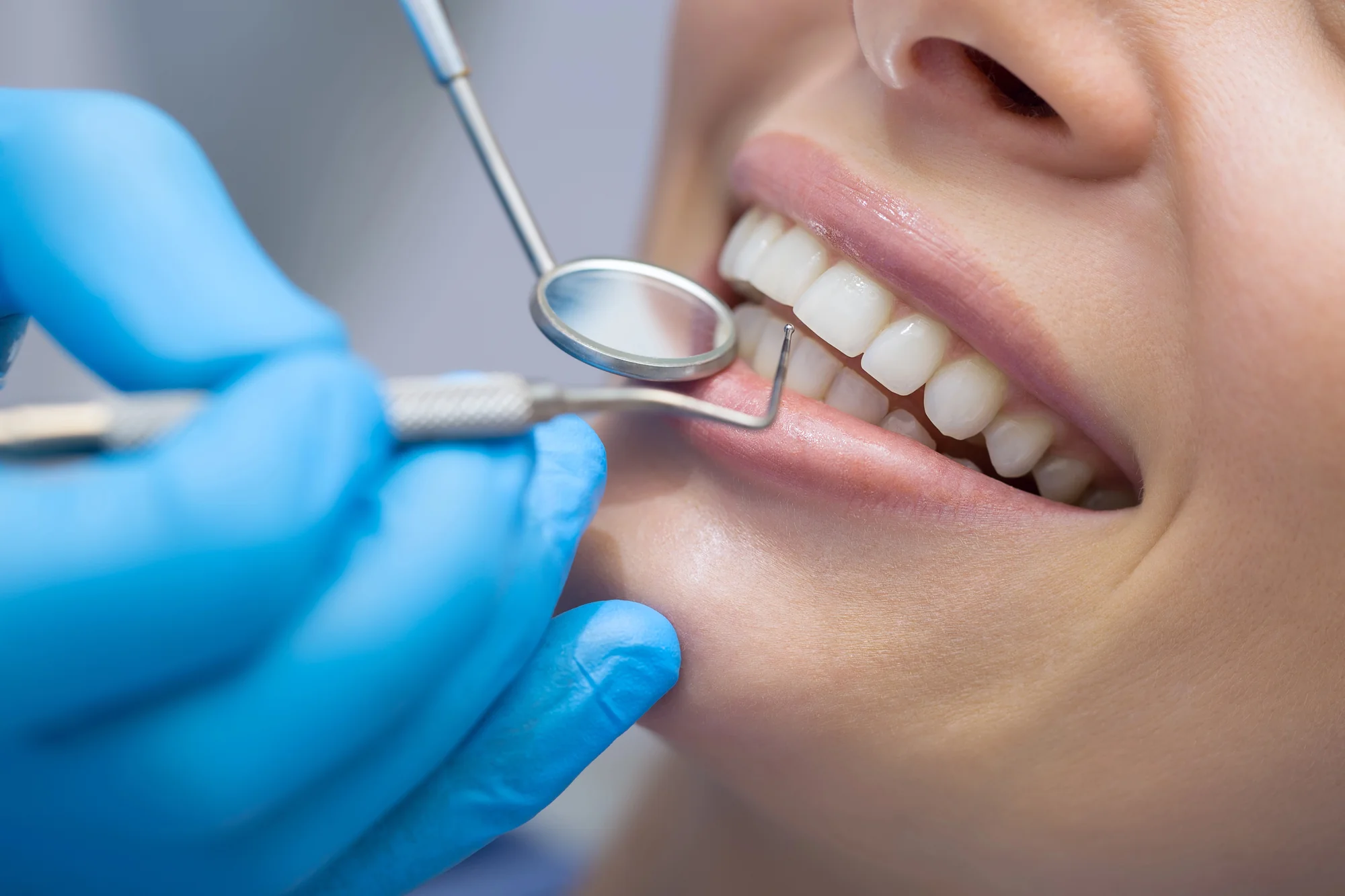
Orthodontics is a specialized area of dentistry that applies constant, gentle mechanical forces to move teeth through the alveolar bone to correct malocclusions, dental crowding, and skeletal jaw discrepancies over time. This biological process aligns the teeth into a functional, harmonious smile, enhancing chewing function, speech patterns, and long-term periodontal health.
This article teaches the principles behind and differences in the orthodontic forces generated by traditional metal braces and clear braces to move teeth to their ideal alignment. You learn clinical biomechanical guidelines, the difference between pulling and pushing, and important day-to-day considerations such as diet and oral hygiene.
The Mechanics of Traditional Metal Braces
Traditional metal braces are a solid, high-integrity orthodontic system that has been correcting malocclusions for decades. This fixed appliance attaches directly to your teeth, creating a highly controlled pulling force that meets the medical-grade stainless steel standards to establish a healthy, balanced, functional, and stable orthodontic bite.
Metal Brackets as Direct Handles on the Tooth Enamel
Your treatment safely guides mechanical forces using direct anchor points on your teeth. These are the key attachment points in regular orthodontics. An experienced dental professional securely bonds these tiny squares to the midsection of your teeth with a safe, specialized dental composite adhesive. Your dentist uses a high-intensity light to cure and harden the adhesive that holds the bracket securely in place.
According to the American Association of Orthodontists (AAO), every bracket is designed with predetermined prescription angles for a particular tooth movement. This engineering allows brackets to function as handles, meaning the system’s force is transferred directly to the enamel and tooth roots.
The slots in each bracket are calibrated to 0.018 or 0.022 inches, through which the main wire runs, providing very accurate three-dimensional control. This structural arrangement is designed to drive each tooth toward its target position while actively minimizing unwanted movements and allowing the crown and root to move simultaneously in a balanced position. This exact, accurate relationship keeps the structure stable and continually moves toward realignment.
Archwires and the Superelastic Power of Shape-Memory Alloys
The main force that propels your orthodontic treatment is the archwire. This is a flexible metal wire that is placed through the slot of each bracket, spanning your dental arch. Modern orthodontics employs superelastic alloys like nickel-titanium. When the orthodontist first places the archwire, your crooked teeth will stretch and flex the wire to fit the irregular shape of your mouth.
The alloy’s “thermal activation threshold” is reached by heat from your body (usually between 35 and 37 degrees Celsius), and the wire will always try to restore its original, ideal curve. This corrective action creates a consistent pulling force, which slowly pulls your teeth towards the desired arch. Your treatment will gradually move from thin, soft wires to thicker, harder wires.
These changes ensure a consistent, gradual pressure, resulting in a safe and predictable movement through each stage. This mechanical engine is used to maintain alignment continuously 24 hours a day. This structural stability ensures that your smile transformation continues smoothly through your orthodontic journey.
Ligatures and Elastics for Direct Force Transfer
The archwire needs to be securely fastened to transmit the restorative energy to your teeth. This is an important locking function accomplished by a ligature, which is an elastic O-ring. They are wrapped around the wing of each bracket to hold the wire in the bracket slots. If the ligatures were not present, the archwire would move freely and would not be able to exert a concentrated force.
Your provider will change these bands at each adjustment appointment to ensure they always have the correct pressure. You can easily select from subtle or brightly colored bands. In addition to these O-rings, your provider may use larger elastic bands that extend from your upper and lower teeth.
Depending on your bite classification, these medical-grade inter-arch elastics can pull the lower jaw forward or backward to align your bite, usually with a force of 50 to 150 grams. This dynamic system translates each bracket’s tension into a single, three-dimensional alignment system that balances your bite. This ongoing coordination creates a perfectly aligned, functional bite across your upper and lower teeth.
The Mechanics of Clear Aligners
Clear aligners use a new compression system that works on a mechanical level different from traditional fixed appliances. Rather than using an archwire to pull your teeth, these custom clear plastic trays cover your entire dental arch and progressively push your teeth into alignment through minor, highly controlled movements.
Customized Thermoplastic Trays and 3D Digital Staging
The clear aligner treatment process uses advanced CAD/CAM systems to plan your treatment before treatment begins. Your provider creates a detailed 3D digital model of your mouth using a high-resolution intraoral scanner rather than impressions. The specialized digital staging software then models the entire movement of your teeth, determining the exact trajectory they will follow to reach their proper alignment. This computer-generated path consists of individual stages, each represented by a custom-made, FDA-approved, clear plastic tray.
Each newly fabricated tray is designed to fit over your teeth with a slight variation from their current position, typically programming a micromovement of about 0.25 mm. The rigid plastic forms a slight bend over the teeth and provides mechanical resistance. This resistance gently and consistently forces the surrounding bone tissue to adjust and adapt to the new, straighter shape. This method of shifting moves targeted forces throughout your dental arch, so that only certain teeth move during each phase.
Aligner Attachments Acting as Angled Handles
Thermoplastic trays are used over smooth, rounded tooth crowns, so they need extra assistance to perform more complicated movements, such as dental rotations or vertical movements. Your trusted orthodontist will place small, tooth-colored composite bumps on the enamel of certain teeth to overcome this problem. These attachments or buttons stay on your teeth during treatment and serve as personalized handles.
Each attachment is precisely designed and positioned at a certain angle to match the desired motion of that particular tooth. The clear aligner tray has matching indentations that fit into these composite bumps.
As the plastic tray attempts to resume its molded form, its inner walls contact the flat edges of the attachments. This interface creates certain force-active vectors, which enable the aligner system to provide rotational force or push the teeth down into correct alignment. These little helpers make the pushing forces much more effective. Such structural coordination allows the smooth thermoplastic material to make complex orthodontic adjustments that would otherwise be impossible with plain plastic trays alone.
Interproximal Reduction (IPR) to Create Structural Space
If you have overcrowded teeth, you need adequate space in your mouth for the teeth to move into alignment. Your provider may also perform interproximal reduction (IPR) if there is insufficient space in the dental arches to correct crowding. IPR involves removing enamel layers, but your provider will only remove enough to stay within a safe clinical range of 0.2 to 0.5 millimeters per contact point, to avoid post-operative sensitivity.
IPR slightly reduces the width of specific teeth, creating room for the clear aligners to move the teeth into alignment without obstructing. This spatial control helps prevent teeth from colliding during programmed movements, which helps the clear aligners work more efficiently.
This painless process is performed by your dental professional using ultra-fine, flexible strips or discs; it not only maintains the health of your enamel but also creates the exact physical space needed for structural realignment. This measured distance is crucial for predictably correcting overcrowding with clear brackets. This structural technique creates optimal clinical spacing and allows each successive plastic tray to apply direct pressure in the right place, while maintaining enamel.
Direct Comparison of Both Orthodontic Force Systems
Understanding how these two systems work will help you choose the right appliance for your smile. Research in the American Journal of Orthodontics and Dentofacial Orthopedics (AJODO) shows that while both methods naturally reshape your jawbone, the specific way they apply force determines which one is better at fixing severe bite issues.
Pulling vs Pushing Forces for Rotations and Vertical Movements
The difference between traditional braces and clear braces is that traditional braces pull and push, while clear braces do not. The traditional metal brace uses tension, which is applied to individual teeth with a rigid brace and active archwire. This mechanical system allows the clinician to have a high degree of precise control over the entire tooth structure and is very efficient for complex structural adjustments. This is for severe cases involving deep bites, complex root torque, or significant vertical discrepancies.
Clear aligners, on the other hand, use compression to apply pressure to specific surfaces of the entire clinical crown with a molded plastic shell. This gentle pushing force is very effective in expanding narrow arches or in correcting minor to moderate vertical displacers and root torque. Still, clinical tracking parameters outlined by the American Dental Association (ADA) indicate plastic shells are not effective in correcting severe vertical displacers or complex root torque.
Metal braces offer strong, stable pulling forces and remain the first choice for complex cases that require deep skeletal correction. The only way to determine which force system is appropriate for your structure is to conduct a clinical assessment. This comparison helps you create your personalized plan.
Fixed Continuous Loads vs Removable Compliance-Dependent Pressure
The other important mechanical distinction is how the force is applied and sustained over time. With traditional braces, the brackets are glued to the enamel and are permanently attached to your teeth. This constant connection means that your periodontal ligament is under constant load, which means the biological realignment process is going on around the clock.
On the other hand, clear aligners are removable, so the forces they exert are only active when you are wearing them. The key to aligner success is that you must wear them for at least 22 hours a day. If this is not achieved, cellular bone remodeling is halted, and biomechanical lag can create a risk of root resorption or tracking loss.
Clear aligners are very convenient, but treatment success depends on the patient’s adherence, whereas metal braces work on their own and are not dependent on the patient’s discipline. This functional difference will ultimately determine whether your day-to-day schedule is better suited to self-managed orthodontic treatment or to a worry-free, structural alignment of your mouth.
Why You Should Consult a Dentist
Having a professional diagnosis helps you know if traditional metal braces or clear braces will be an ideal dental treatment for your smile. Each patient has a specific combination of dental structures, bone density, and lifestyle habits that determine the ideal orthodontic solution. Your dentist takes comprehensive digital diagnostic images, including 3D intraoral digital scans, panoramic radiographs, and lateral cephalometric analyses, to evaluate your skeletal jaw relationship and to accurately assess root angles.
This comprehensive diagnostic evaluation will help you understand whether you need the strong, steady pull of metal braces or if you could achieve the predictable results of clear aligners.
A professional consultation also lets you discuss your lifestyle, including your ability to follow rigorous wear times or complete special cleaning schedules. Your provider uses precise 3D imaging, like Cone Beam Computed Tomography (CBCT), to safely map your jawbone before moving your teeth.
The safest way to get your teeth properly aligned is to seek clinical advice and ensure a balanced bite. When you work closely with the dental team, you can feel confident that your treatment plan is optimized for efficiency and highly predictable results. With this direct assistance, your entire smile transformation stays comfortable and on track.
Find an Experienced Orthodontist Near Me
To achieve straighter teeth, you should understand how orthodontic systems work to reshape your jawbone. Traditional metal braces are unmatched for mechanical stability in severe tooth crowding. Clear braces are unmatched for aesthetic flexibility in mild to moderate tooth crowding. Both treatments use your bones’ natural ability to change to create more aligned teeth and improve your life.
Our orthodontists at SoCal Dental of Valencia are well-equipped to assess your bite and create an orthodontic treatment plan that suits your lifestyle. Schedule a consultation as soon as possible to prevent complications like uneven enamel wear or jaw strain. Contact us today at 661-554-4545.